Summary:
What Makes Seamless Gutters Different From Sectional Gutters
Seamless gutters are fabricated from a single continuous piece of material, custom-cut on-site to fit your home’s exact measurements. The only seams you’ll find are at the corners and downspouts. Sectional gutters, by contrast, are assembled from pre-cut segments—typically 10 to 20 feet long—that snap or weld together with connectors every few feet.
That difference matters more than it sounds. Every seam in a sectional system is a potential failure point where leaks develop, debris accumulates, and structural weakness shows up over time. When you eliminate those seams, you eliminate most of the problems that force homeowners to repair or replace their gutters years earlier than they should need to.
The fabrication process also ensures a better fit. Because seamless gutters are made to your home’s specific dimensions rather than pieced together from standard lengths, water flows exactly where it should without the gaps, misalignments, or weak connections that plague sectional installations.
How seamless gutters reduce leaks and water damage
Leaks don’t just appear randomly. They develop at the weakest points in your gutter system—and in sectional gutters, those weak points are everywhere the sections connect. Each joint requires sealant to prevent water from escaping, and that sealant degrades over time from temperature swings, UV exposure, and the constant expansion and contraction that happens when gutters heat up in summer and freeze in winter.
Seamless gutters eliminate about 90% of those potential leak points. With no seams running along the length of your roofline, there’s simply nowhere for water to escape except where it’s supposed to go: through the downspouts and away from your foundation. The few joints that do exist—at corners and downspouts—are easier to seal properly and maintain over time because there are so few of them.
This matters especially in areas like Johnson County, Jackson County, and Platte County where spring storms can dump several inches of rain in a matter of hours. When water is rushing off your roof that fast, even small leaks turn into streams that pour down your siding, saturate the ground around your foundation, and find their way into your basement. Sectional gutters with multiple failing seams can’t handle that volume without causing problems.
Foundation damage from poor water management isn’t a minor inconvenience. When water pools around your home’s base, it creates hydrostatic pressure that weakens the soil and causes cracks in the foundation itself. Those repairs average $3,500 for basic issues but can easily exceed $10,000 when the damage is severe. Seamless gutters prevent that scenario by keeping water flowing through the system instead of leaking out at a dozen different seam failures.
The continuous design also means better performance during freeze-thaw cycles. In Missouri and Kansas, where temperatures can swing from below freezing to well above it within a single day, sectional gutter seams expand and contract at different rates, stressing the connections and accelerating failure. Seamless gutters move as one unit, handling those temperature changes without the structural stress that tears sectional systems apart.
Why seamless gutters require less maintenance than sectional systems
Cleaning gutters ranks somewhere between taxes and dental work on most homeowners’ list of favorite activities. Seamless gutters won’t eliminate the job entirely, but they make it significantly less frequent and less frustrating. The reason comes down to where debris accumulates.
In sectional gutters, every seam creates a small ledge where leaves, twigs, and shingle grit collect. Those collections turn into clogs, which force water to overflow instead of draining properly. Even when you clean sectional gutters thoroughly, debris starts building up again at those same seam points within weeks. You’re fighting a losing battle against the system’s design.
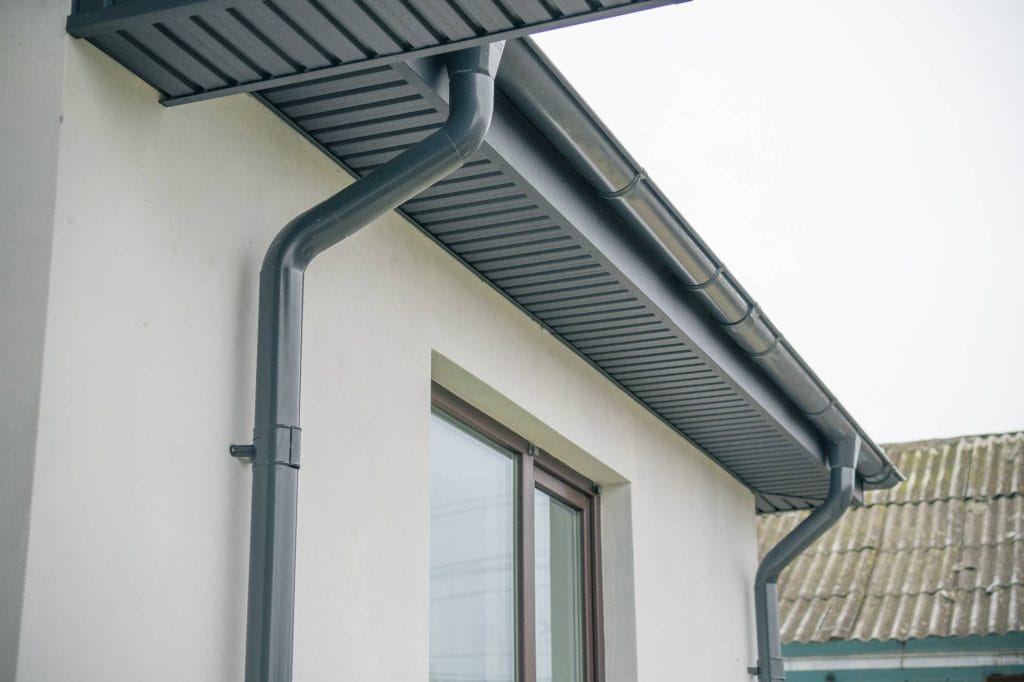
Seamless gutters have smooth interiors with no seams to catch debris. Water flows freely through the entire length, carrying most debris along with it toward the downspouts where it belongs. Homeowners with seamless systems report spending about 30% less time on gutter maintenance compared to those dealing with sectional gutters. That’s not marketing talk—it’s the natural result of removing the physical obstructions where clogs form.
The maintenance difference becomes even more obvious if you live in areas with heavy tree coverage, like Leavenworth County or Lafayette County where mature oaks and maples drop massive amounts of leaves every fall. Sectional gutters in those areas need cleaning multiple times during leaf season just to stay functional. Seamless gutters still need attention, but you’re typically looking at twice a year instead of four or five times.
There’s also the sealant issue. Sectional gutters require regular resealing at every joint to prevent leaks—a job that’s tedious, time-consuming, and easy to put off until you notice water damage. Seamless gutters only need sealant at corners and downspouts, which means you’re maintaining a handful of spots instead of dozens. That’s less work, less expense, and fewer opportunities for small maintenance issues to turn into major problems.
The reduced maintenance translates directly to lower lifetime costs. When you factor in the time, effort, and money saved on cleaning, repairs, and resealing over a 20-30 year period, seamless gutters typically pay for themselves within 5-7 years compared to sectional systems that need constant attention.
Seamless Gutter Installation Cost and Long-Term Value
The upfront cost question stops a lot of homeowners from considering seamless gutters. Yes, they cost more initially than sectional systems. But that’s where the comparison should start, not end. What you’re really evaluating is whether paying more now saves you money over the life of the system—and in most cases, it absolutely does.
Seamless gutter installation typically runs $6 to $30 per linear foot depending on material choice, with most homeowners in Kansas and Missouri paying between $12 and $18 per linear foot for professional aluminum installation. For a typical home needing 150-200 linear feet of gutters, you’re looking at $1,800 to $3,600 total. Sectional gutters cost less upfront—usually $3 to $20 per linear foot—but that initial savings disappears quickly when you account for repairs, maintenance, and earlier replacement.
The math shifts when you look at the full picture. Seamless gutters last 20-30 years with proper installation and minimal maintenance. Sectional gutters typically need replacement after 10-15 years in Midwest climates where temperature extremes and heavy rainfall stress the seams constantly. You’re essentially buying two sectional systems in the time one seamless system lasts, which erases the upfront savings and then some.
What affects seamless gutter installation costs in Kansas and Missouri
Material choice has the biggest impact on what you’ll pay. Aluminum is the most popular option for good reason—it resists rust, handles temperature extremes well, and costs $6 to $12 per linear foot installed. It’s the sweet spot for most homeowners who want durability without premium pricing. Steel gutters run $8 to $20 per linear foot and offer more strength but require coatings to prevent rust in humid climates. Copper is the premium choice at $30 to $50 per linear foot, but it can last 50-100 years and develops that distinctive patina that suits historic homes.
Your home’s size and complexity also drive the price. A single-story ranch with a simple roofline needs less material and less labor than a two-story home with multiple gables, valleys, and corners. Installation on multi-story homes adds $1 to $3 per linear foot because of the extra safety equipment, time, and complexity involved. If your roof is steep or difficult to access, expect additional costs for that as well.
Location matters too. Labor rates in the Kansas City metro area tend to be higher than in more rural parts of Missouri or Kansas, though not dramatically so. The bigger factor is often finding a contractor who understands local weather patterns and sizes your system correctly for the rainfall your area actually receives. A gutter system that’s undersized for Kansas City’s spring storms will overflow no matter how well it’s installed, which defeats the entire purpose.
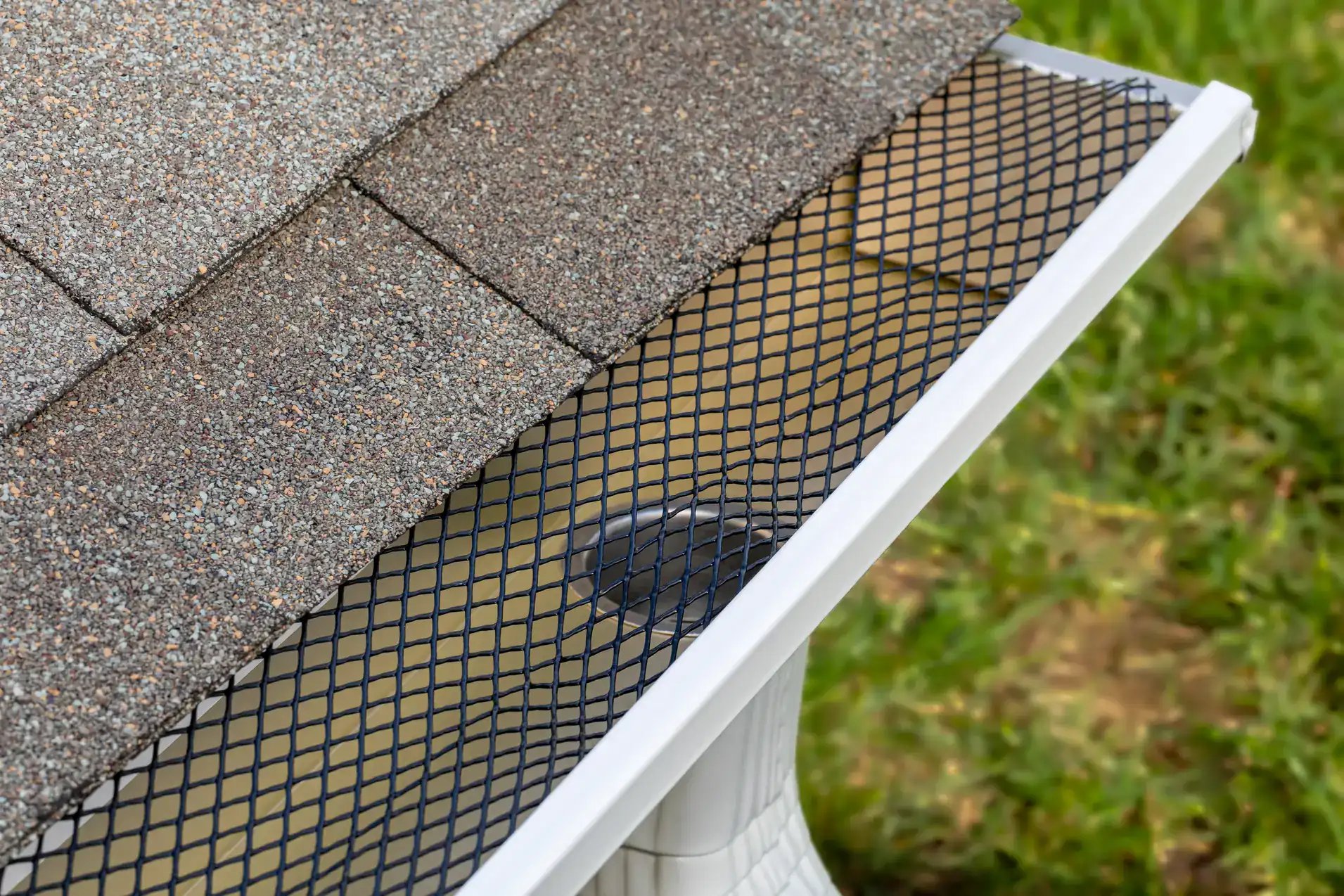
Additional features like gutter guards add to the upfront cost but can be worth it if you’re surrounded by trees. Quality gutter guard systems run $7 to $15 per linear foot installed and can reduce your cleaning frequency from multiple times per year to once or never. For homes in heavily wooded areas of Cass County, Clinton County, or Wyandotte County, that’s often money well spent.
Old gutter removal adds $1 to $2 per linear foot if you’re replacing an existing system. Some contractors include this in their quote, others charge separately, so make sure you’re comparing apples to apples when you get estimates. Fascia repairs are another potential cost if the old gutters damaged the boards they were mounted to—something that’s common with sectional systems that leaked for years before replacement.
How seamless gutters pay for themselves over time
The return on investment comes from three places: reduced maintenance costs, fewer repairs, and avoided damage. Start with maintenance. If you’re paying someone to clean your gutters, sectional systems typically need service 3-4 times per year in areas with significant tree coverage. At $150-250 per cleaning, that’s $600-1,000 annually. Seamless gutters usually need cleaning twice a year, cutting that cost in half. Over 20 years, you’re saving $6,000-10,000 just on cleaning.
Repairs tell a similar story. Sectional gutters need regular resealing, fixing separated seams, replacing damaged sections, and addressing sag from debris buildup. Those repairs add up to several hundred dollars every few years. Seamless gutters need far fewer repairs because there are fewer failure points. The money you don’t spend on constant fixes goes back in your pocket.
The biggest savings come from preventing major damage. Foundation repairs cost thousands to tens of thousands of dollars when water management fails. Basement waterproofing, mold remediation, fascia replacement, and siding repairs from water damage all trace back to gutters that couldn’t do their job. Seamless gutters that actually work prevent those nightmare scenarios entirely.
When you run the numbers, most seamless gutter systems recoup their higher upfront cost within 5-7 years through reduced maintenance, fewer repairs, and avoided damage. After that, you’re ahead financially compared to homeowners who went with cheaper sectional systems and spent the next two decades dealing with problems. The investment makes sense not because seamless gutters are cheap, but because they’re effective enough to save you money over time.
Property value is another factor. Seamless gutters enhance curb appeal with their clean, continuous lines and demonstrate to potential buyers that the home has been maintained properly. When you eventually sell, that matters. Buyers notice water stains on foundations, peeling paint near gutters, and signs of deferred maintenance. Seamless gutters that work properly tell a different story—one that supports your asking price instead of undermining it.
Making the Right Gutter Decision for Your Home
The case for seamless gutters comes down to whether you value long-term performance over short-term savings. If you’re planning to stay in your home for more than a few years, seamless systems deliver better protection, less hassle, and lower lifetime costs than sectional alternatives. They handle Midwest weather better, last longer, and require less of your time and money to maintain.
The upfront cost is real, but so are the benefits. Fewer leaks mean better foundation protection. Less maintenance means more time for things that actually matter. Longer lifespan means you’re not replacing your gutters again in ten years when the sectional system fails. For most homeowners in Kansas and Missouri dealing with heavy spring rains, temperature extremes, and abundant tree coverage, that trade-off makes sense.
If you’re ready to protect your home with a gutter system that actually works, we can help. Our team understands what Kansas and Missouri weather does to homes and we install seamless systems sized correctly for local conditions. Reach out to discuss your specific situation and get straight answers about what your home needs.