Summary:
What Happens When You Ignore Gutter Problems
Most homeowners don’t realize how much work gutters actually do until something goes wrong. Every time it rains, your roof collects hundreds of gallons of water. That water has to go somewhere, and gutters are designed to move it away from your home’s structure—away from your foundation, your walls, your landscaping.
When gutters fail, that water doesn’t just disappear. It overflows, pools, and seeps into places it shouldn’t. Foundation cracks start small but spread fast. Fascia boards rot from constant moisture exposure. Basements flood. Landscaping erodes. What starts as a $200 cleaning job becomes a $6,000 foundation repair because the problem went unnoticed—or worse, ignored.
Kansas City’s heavy spring rains and freeze-thaw cycles make this even more urgent. Water that can’t drain properly freezes in winter, expands, and causes even more damage. The longer you wait, the more expensive the fix becomes.
Foundation Damage and Basement Flooding
When gutters overflow or leak, water pours directly down next to your foundation. That might not sound catastrophic at first, but here’s what actually happens: the soil around your foundation becomes saturated. That saturation creates hydrostatic pressure—basically, water pushing against your foundation walls from the outside.
Over time, that pressure causes cracks. Those cracks let water seep into your basement. Once water’s inside, you’re dealing with mold, damaged belongings, and potentially serious structural issues. Foundation repairs aren’t cheap—they typically run between $4,000 and $15,000, depending on how far the damage has spread.
The frustrating part? Most foundation damage from gutters is completely preventable. If your gutters are directing water at least 10 feet away from your home, your foundation stays dry. If they’re clogged, sagging, or leaking, that water goes straight down and sits right where it can do the most harm.
You’ll know you have a problem if you see water pooling near your foundation after storms, damp spots in your basement, or cracks forming in your foundation walls. Soil erosion around the base of your home is another telltale sign—it means water’s been overflowing in the same spot repeatedly. Catching this early means a gutter repair. Ignoring it means calling a foundation specialist and writing a check with a lot more zeros.
Fascia Rot and Structural Damage
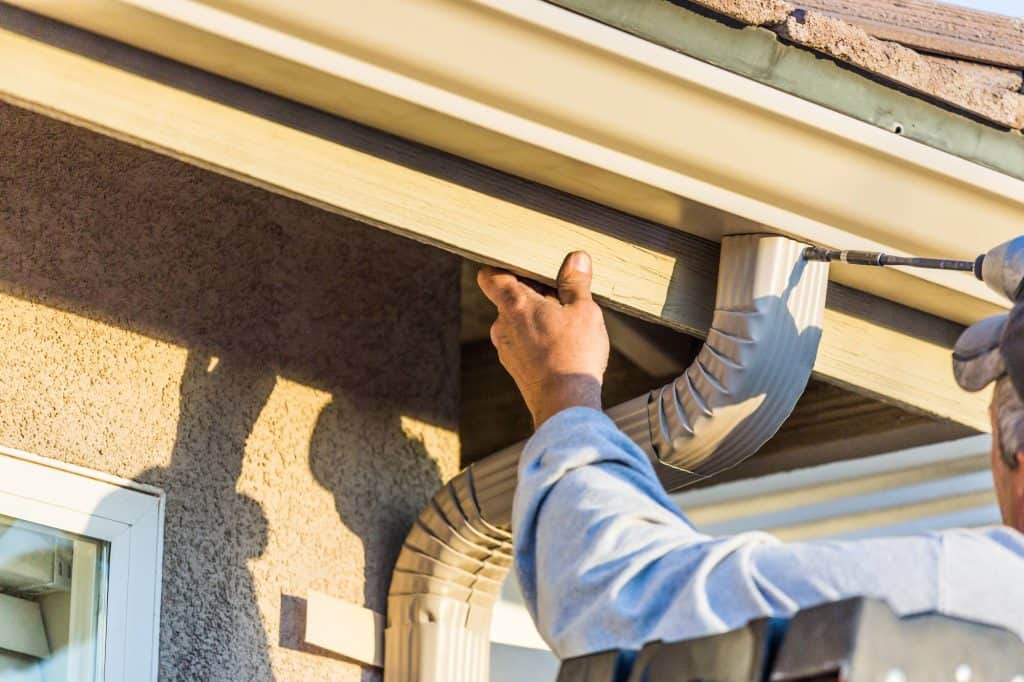
Fascia boards are the long wooden boards running along your roofline where your gutters attach. They’re not just decorative—they protect the exposed edges of your roof, support your gutter system, and keep water out of your attic and walls. When gutters leak or overflow behind the boards instead of away from them, those fascia boards stay wet. And wet wood rots.
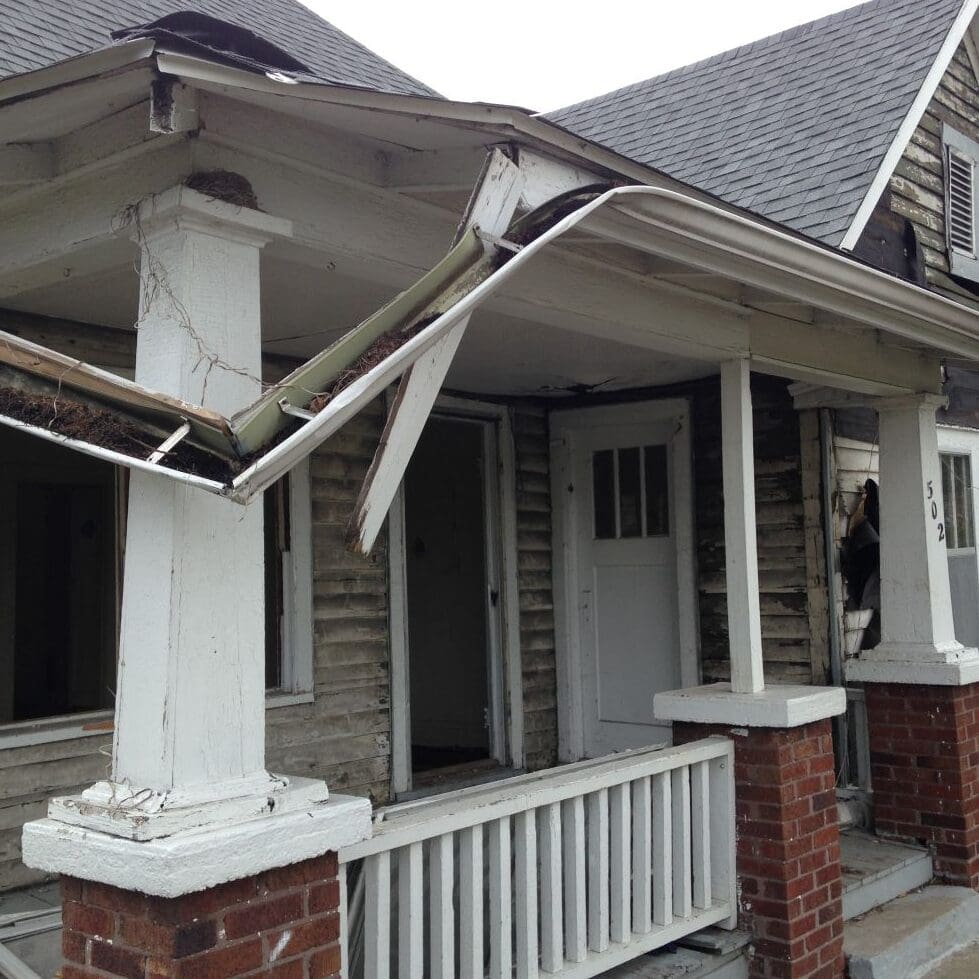
Fascia rot doesn’t happen overnight, but once it starts, it spreads. The paint peels first. Then the wood gets soft and discolored. Eventually, the boards can’t support the weight of your gutters anymore, and the whole system starts pulling away from your house. If you’ve ever seen gutters literally hanging off a home, that’s usually because the fascia behind them rotted through.
Replacing rotted fascia costs anywhere from $600 to $2,000 or more, depending on how much damage there is and whether the rot has spread to the roof rafters underneath. And here’s the kicker—you often have to remove and reinstall the gutters as part of the repair, which adds to the cost.
The warning signs are pretty obvious if you know what to look for. Peeling paint on your fascia boards. Water stains. Visible discoloration or soft spots when you press on the wood. Gutters that sag or pull away from the roofline even after they’ve been cleaned. If you catch it early—when the paint’s just starting to peel—you might get away with repainting and sealing the boards. Wait too long, and you’re looking at full replacement. Prevention here is simple: make sure your gutters aren’t overflowing or leaking behind the boards. If water’s going where it’s supposed to, your fascia stays dry and intact.
Common Gutter Repair Signs You Shouldn't Ignore
Gutters don’t just fail without warning. They give you plenty of signs that something’s wrong—you just have to know what to look for. Some are obvious, like water pouring over the sides during a rainstorm. Others are subtler, like a slight sag in one section or a small rust spot you noticed last fall and forgot about.
The key is catching these signs before they turn into bigger problems. A small leak is a quick fix. A gutter that’s pulled completely away from the house because the fascia rotted? That’s a much bigger job. Let’s go through the most common warning signs and what they actually mean for your home.
Sagging Gutters and Pulling Away from the House
If your gutters are sagging, bowing, or pulling away from your roofline, that’s not something you can put off. Sagging usually happens for one of two reasons: either the gutters are full of water and debris, making them too heavy for the hangers to support, or the fascia boards they’re attached to have started to rot and can’t hold them anymore.
Sometimes it’s a combination of both. Clogged gutters hold standing water, which adds weight. That weight stresses the hangers and the fascia. Over time, the hangers bend or pull loose, and the gutters start to sag. Once they sag, water doesn’t flow toward the downspouts anymore—it just sits there, making the problem worse.
You’ll usually notice this from the ground. Walk around your house and look up at the roofline. If you see sections that dip down or gaps between the gutter and the fascia, that’s sagging. You might also notice that water overflows in certain spots during rain, even if the gutters aren’t completely clogged—that’s because the sagging has disrupted the slope that’s supposed to guide water toward the downspouts.
Fixing sagging gutters might be as simple as tightening or replacing a few hangers, especially if you catch it early. But if the fascia’s rotted, you’re looking at wood replacement before the gutters can be properly secured again. Either way, this isn’t something that fixes itself. Sagging gets worse over time, not better, and the longer it goes on, the more likely you are to end up with water damage inside your walls or along your foundation.
Gutters Leaking and Overflowing During Rain
Water spilling over the sides of your gutters during a rainstorm is one of the clearest signs something’s wrong. Gutters are designed to handle a lot of water—but only if they’re clear, properly sloped, and intact. When they overflow, it usually means one of three things: they’re clogged, they’re leaking at the seams, or they’re not pitched correctly.
Clogs are the most common cause. Leaves, twigs, shingle grit, and other debris build up inside the gutters and block the path to the downspouts. When that happens, water has nowhere to go but over the edge. You’ll often see overflow happening near downspouts, where clogs tend to form. If you’ve got trees near your house—especially maples, oaks, or evergreens—you’re dealing with this more often than homeowners without nearby trees.
Leaking seams are another issue, especially with sectional gutters. These are the gutters made from pieces that snap or seal together every few feet. Over time, those seams can separate or the sealant can crack, letting water drip or pour out behind the gutter instead of flowing through it. Seamless gutters don’t have this problem as often because there are fewer weak points, but even seamless systems can develop leaks at the corners or end caps.
Improper pitch is less obvious but just as problematic. Gutters need to slope slightly toward the downspouts—usually about a quarter inch for every 10 feet. If they’re installed flat or sloped the wrong way, water sits in the gutters instead of draining. That standing water attracts mosquitoes, promotes rust, and eventually overflows during heavy rain.
If you’re seeing overflow, start by checking for clogs. If the gutters are clear and still overflowing, you’re likely dealing with a structural issue—leaking seams, damaged sections, or incorrect slope. Any of these problems can be repaired, but the longer water’s overflowing, the more likely you are to see damage to your siding, fascia, or foundation. Catching it now means a straightforward gutter repair. Ignoring it means dealing with the aftermath of water going where it shouldn’t for weeks or months.
When to Call for Professional Gutter Repair
Here’s the bottom line: small gutter problems don’t stay small. A little overflow becomes a basement leak. A slight sag becomes a fascia replacement. A small crack becomes a section of gutter hanging off your house after the next storm. The difference between a manageable repair and a financial disaster often comes down to timing.
If you’re seeing any of the signs we’ve talked about—sagging, leaking, overflow, water pooling near your foundation, stains on your siding—it’s worth getting a professional to take a look. Most issues are fixable when caught early, and the cost of a repair is a fraction of what you’d pay to fix foundation damage, replace rotted fascia, or deal with a flooded basement.
We’ve been helping homeowners throughout Buchanan County and the Kansas City metro protect their homes for over three decades. From gutter repair and replacement to full exterior services, our team understands what Kansas and Missouri weather does to homes—and how to prevent problems before they start. If your gutters are giving you warning signs, don’t wait until the next storm to find out how bad it really is.