Summary:
What Are Gutter Guards and How Do They Work
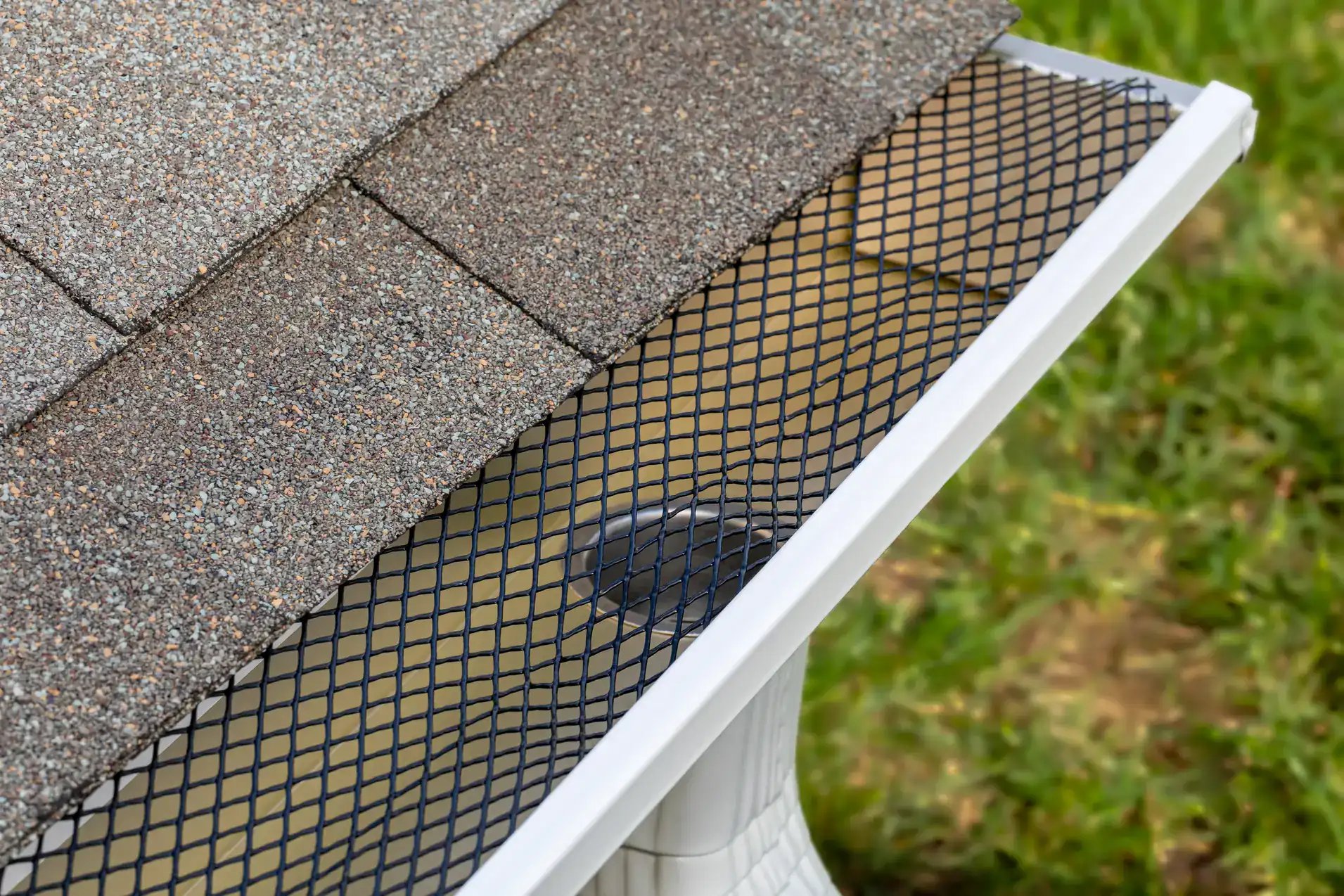
Gutter guards are protective covers that sit on or inside your gutters. They let water pass through while blocking leaves, twigs, pine needles, and other debris from entering your gutter system.
Think of them as filters. When rain hits your roof, it flows down into the gutters—but without guards, it brings everything with it. Leaves, dirt, seed pods, shingle grit. All of it piles up, clogs the system, and forces water to overflow.
Gutter guards create a barrier. Water gets through. Debris doesn’t. That means your gutters do their actual job—directing water away from your foundation, roof, and landscaping—without constant intervention from you.
How Gutter Protection Systems Prevent Clogs
Clogged gutters don’t just happen. They’re the result of debris building up faster than water can move it through. Once leaves and twigs create a dam, water backs up, pools, and eventually spills over the sides.
Gutter guards stop that cycle before it starts. Most systems use one of a few approaches. Micro-mesh guards feature ultra-fine stainless steel screens that block even the smallest debris—pine needles, roof grit, seeds—while allowing water to flow freely through tiny openings. Screen guards use larger perforations to keep out leaves and twigs, though smaller debris can sometimes slip through. Reverse-curve systems rely on surface tension, guiding water into the gutter while pushing debris over the edge.
Each type works differently, but the goal is the same. Keep gutters clear so water moves through the system without obstruction. In areas like Jackson County, MO and Johnson County, KS, where mature oak and maple trees drop heavy leaf loads every fall, that protection becomes critical. Without guards, gutters can clog within days of a storm. With them, you’re looking at months—sometimes a full year—before any maintenance is needed.
The difference isn’t just convenience. It’s about preventing the overflow that leads to foundation cracks, basement flooding, and landscape erosion. When gutters stay clear, water goes where it’s supposed to. When they clog, it goes everywhere else.

Types of Gutter Guards and Which Work Best
Not all gutter guards deliver the same results. Some handle heavy debris loads with ease. Others struggle with smaller particles or require frequent cleaning themselves.
Micro-mesh guards are widely considered the most effective option. Made from stainless steel or aluminum with surgical-grade mesh, they block debris as small as roof grit and pine needles while handling high water flow. They’re durable, lasting 10 to 20 years, and require minimal maintenance. The trade-off? Higher upfront cost and professional installation for best results.
Screen guards offer a middle ground. These perforated metal or plastic covers sit on top of gutters and block larger debris like leaves and twigs. They’re more affordable and easier to install, but smaller debris can slip through the holes over time. They work well in areas without heavy pine needle or seed pod issues.
Reverse-curve guards use a curved design that relies on surface tension to pull water into the gutter while debris slides off the edge. They’re effective at keeping out large debris and often come with long warranties. However, they can struggle in heavy rainfall, sometimes allowing water to overshoot the gutter entirely. They also tend to be more visible from the ground, which some homeowners dislike.
Foam and brush guards are budget-friendly options that sit inside the gutter. Foam inserts allow water to soak through while blocking debris on top. Brush guards use stiff bristles to catch leaves while water flows around them. Both are easy to install yourself, but they degrade faster—typically lasting just a few years—and can trap smaller debris, requiring more frequent cleaning than other types.
For homeowners dealing with seasonal storms and heavy tree coverage across Kansas and Missouri, micro-mesh and quality screen guards tend to perform best. They handle the volume of debris common in the region while standing up to the area’s 40-plus inches of annual rainfall.
Benefits of Gutter Guards for Your Home
Gutter guards do more than keep leaves out. They protect your home from damage, reduce maintenance costs, and eliminate safety risks you shouldn’t have to take.
The most obvious benefit is less cleaning. Without guards, gutters typically need clearing two to four times per year. With quality protection, that drops to once a year or less. For homeowners paying $120 to $300 per professional cleaning, that’s $240 to $600 saved annually.
Beyond convenience, guards prevent the kind of damage that costs thousands to repair. When gutters clog and overflow, water doesn’t just disappear. It pools around your foundation, seeps into basements, erodes landscaping, and damages siding. Foundation repairs alone can run $4,500 or more. Basement flooding remediation? $500 to $10,000 depending on severity.
How Gutter Guards Extend the Life of Your Gutters
Gutters aren’t built to hold standing water and debris for long periods. When leaves and twigs sit in the system, moisture accelerates rust and corrosion. The added weight from waterlogged debris causes gutters to sag, pull away from the fascia, and eventually fail.
Gutter guards prevent that breakdown. By keeping debris out, they eliminate the standing water that leads to rust. They also reduce the weight load, preventing sagging and separation. The result? Gutters that last significantly longer—often 10 to 20 years beyond their typical lifespan.
That extended lifespan translates directly to cost savings. Replacing gutters on an average home runs $2,200 to $5,000 for 150 linear feet. If guards help you delay that replacement by even a decade, the investment pays for itself.
There’s another factor worth considering. Clogged gutters create breeding grounds for pests. Mosquitoes lay eggs in stagnant water. Birds and rodents build nests in the debris. Insects burrow into the muck. Gutter guards eliminate those habitats by keeping water moving and debris out. That means fewer pest problems around your home and less risk of infestations spreading to your attic or walls.
In colder climates—or during Missouri and Kansas winters—guards also help prevent ice dams. When gutters clog and water can’t drain, it freezes in place. That ice blocks further drainage, forcing water to back up under shingles and into the roof. Gutter guards maintain proper flow, reducing the chance of ice buildup and the damage it causes.

Reducing Maintenance and Improving Home Safety
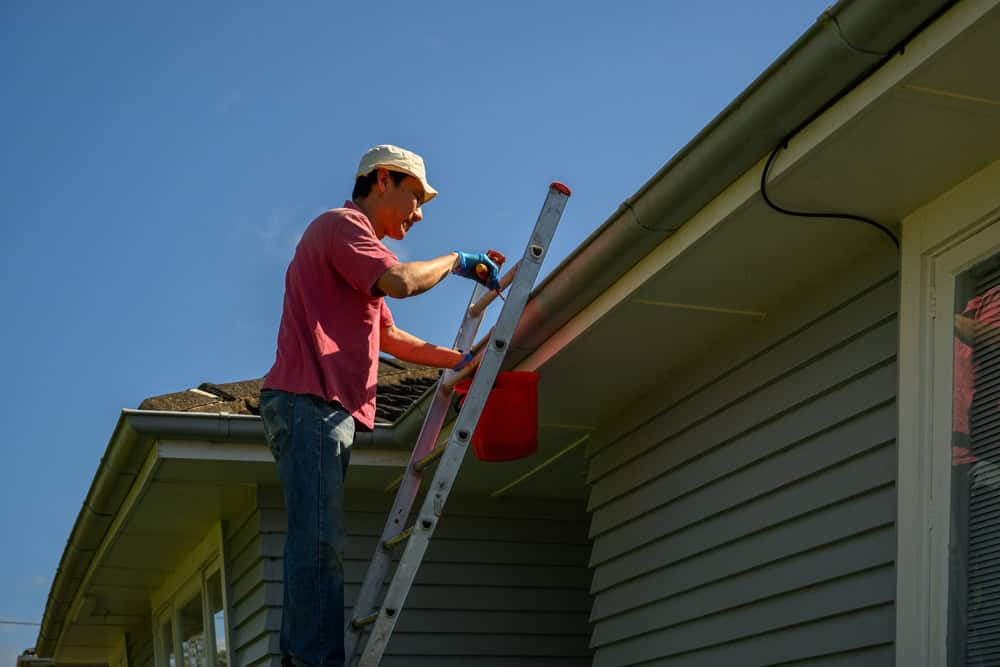
Ladder-related injuries send more than 500,000 people to emergency rooms every year. Many of those accidents happen during gutter cleaning. You’re working at height, reaching awkwardly, and dealing with wet, slippery debris. It’s one of the most dangerous routine home maintenance tasks.
Gutter guards dramatically reduce how often you need to climb that ladder. For many homeowners, that alone justifies the investment. You’re not just saving time—you’re avoiding a real safety risk every time you skip a cleaning.
The maintenance reduction goes beyond frequency. When you do eventually need to check or clean your gutters, the job is faster and easier. Instead of scooping out packed, waterlogged leaves, you’re brushing off dry debris from the top of the guards. No digging. No mess. Just a quick pass and you’re done.
That simplicity matters more as you get older or if mobility becomes an issue. Gutter guards give you the option to handle light maintenance yourself without the physical demands of traditional cleaning. And if you prefer to hire professionals, the service costs less because the job takes less time.
There’s also the peace of mind factor. You’re not constantly wondering if your gutters are clogged. You’re not stressing about whether the next storm will cause overflow and damage. The system works, water flows, and you move on with your life. That mental relief is harder to quantify, but it’s real.
For homeowners across the Kansas City metro area and surrounding counties, where spring storms and fall leaf drops create seasonal maintenance spikes, gutter guards level out that workload. Instead of scrambling to clean gutters after every storm or before winter, you’re checking them once a year and calling it done. Recent surveys show 69% of homeowners report being very satisfied with their gutter guard investment—and it’s easy to see why when the alternative is constant maintenance and worry.
Are Gutter Guards Worth the Investment
Gutter guards aren’t cheap. But neither is foundation repair, basement waterproofing, or replacing damaged gutters. When you weigh the upfront cost against years of reduced maintenance and avoided damage, the math makes sense.
You’re looking at less time on ladders, fewer professional cleanings, and real protection for your home’s structure. You’re preventing the kind of water damage that costs thousands to fix and extending the life of your gutters by a decade or more.
If you’re tired of cleaning gutters multiple times a year or worried about what clogged gutters are doing to your home, it’s worth a conversation. We can walk you through your options, explain what works best for your home, and give you a clear picture of what to expect. No pressure. Just honest answers and a system that actually works.