Summary:
How Different Types of Gutter Guards Actually Work
Gutter guards aren’t all created equal. Understanding how each type functions is crucial for making the right choice. The basic principle is simple: allow water through while keeping debris out. But the execution varies dramatically.
Each system uses different methods to achieve this goal. Some rely on physical barriers with holes or mesh. Others use physics principles like surface tension to guide water into gutters while deflecting debris. The effectiveness depends heavily on your specific conditions – the types of debris you deal with, your roof pitch, and local weather patterns.
Screen and Mesh Guards: The Most Popular Choice
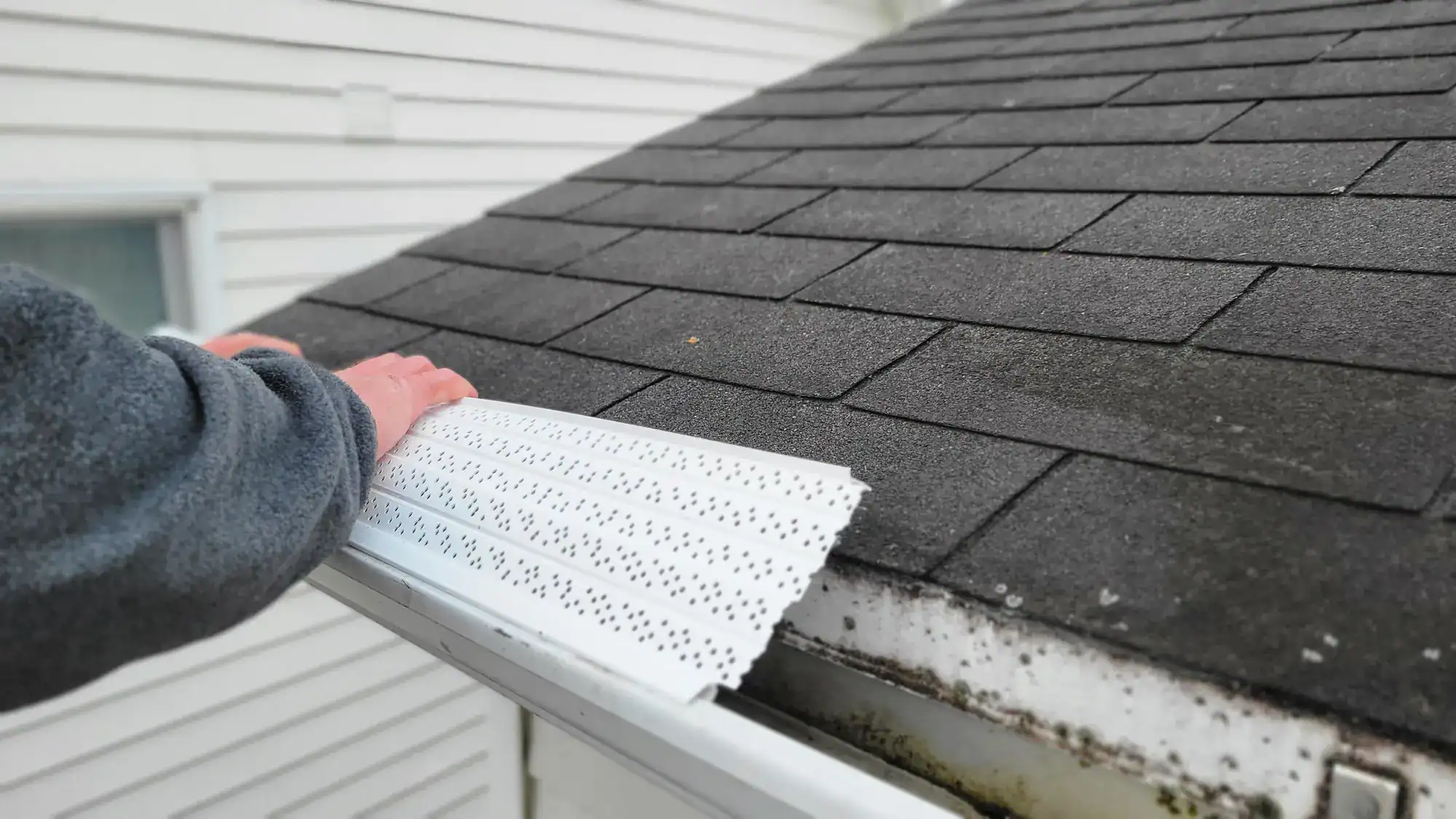
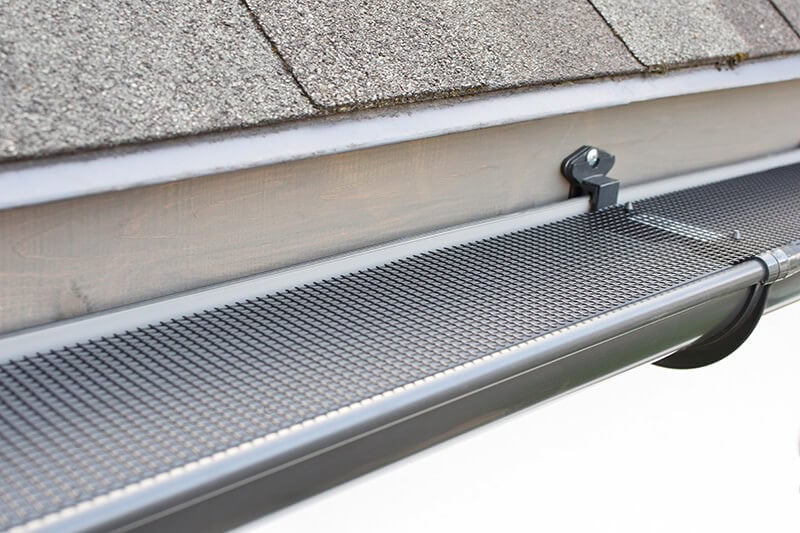
Screen guards are the workhorses of the gutter guard world. There’s a reason 43% of homeowners choose them. These systems use perforated metal or plastic barriers that sit over your gutters, allowing water to flow through while blocking larger debris like leaves and twigs.
The key difference lies in the hole size. Standard screen guards work well for larger debris but can let smaller particles through. Micro-mesh guards take this concept further, using surgical-grade stainless steel with holes so small they block even pine needles and shingle grit. This fine mesh is particularly valuable in Kansas City, where our diverse tree population drops everything from large maple leaves to tiny seed pods.
Installation is relatively straightforward. Many homeowners can handle basic screen guards as DIY projects. However, the quality varies significantly. Cheap plastic versions may warp under Kansas City’s temperature extremes. Heavy-duty aluminum or stainless steel options can last decades. The trade-off is cost – premium micro-mesh systems can run $6-12 per linear foot installed, but they offer superior protection.
One consideration for our area: during heavy spring thunderstorms, some mesh guards can become overwhelmed by water volume. The mesh creates surface tension that can cause water to sheet over the edge rather than flowing through. This is why professional sizing and installation matter, especially given Kansas City’s intense rainfall rates, which can exceed 3 inches per hour during severe thunderstorms.

Surface Tension Guards: Using Physics to Your Advantage
Surface tension guards, also called reverse curve or helmet-style guards, represent the oldest technology dating back to the early 1900s. These systems use a completely different approach – instead of filtering debris, they redirect it.
The rounded hood of a reverse curve guard creates surface tension, guiding the rainwater downward and through the opening. Water follows the curve due to surface tension and flows into the gutter, while leaves and debris fall off the edge to the ground below. It sounds elegant in theory. When working properly, these systems can handle large volumes of water effectively.
However, the reality in Kansas City conditions is more complex. The curve quickly gets dirty from oils from your shingles and dirt from your roof. This compromises the surface tension effect. During light rains or drizzle – common in our spring and fall seasons – water may not have enough force to follow the curve, causing it to drip off instead of entering the gutter.
Installation requires professional expertise because the angle and positioning are critical. If installed incorrectly, you’ll have water overshooting your gutters entirely. These systems also tend to be more expensive, typically costing $6-15 per linear foot. They’re highly visible from the ground, which some homeowners find aesthetically unappealing. In winter, they can create large icicles that pose safety hazards around entryways and walkways.
Are Gutter Guards Worth the Investment for Kansas City Homes?
The honest answer depends on your specific situation, but the data is encouraging. Recent surveys show 69% of homeowners are “very satisfied” with their gutter guard performance, and 44% report they no longer clean their gutters after installation.
For Kansas City homeowners, the investment calculation is particularly compelling. Our region’s weather patterns create perfect conditions for gutter problems – heavy spring rains, humid summers that accelerate debris decomposition, and seasonal leaf drop from mature trees. Without protection, most local homeowners need to clean gutters 2-4 times per year.
Cost-Benefit Analysis for Local Conditions
Professional gutter guard installation in Kansas City ranges from $3.50 to $9.50 per linear foot, depending on the system type. For a typical 200-foot installation, you’re looking at $700-1,900 upfront. That might seem steep, but consider the alternatives.
Professional gutter cleaning costs $70-190 per service in Kansas City. If you’re cleaning 3 times annually, that’s $210-570 per year. Quality gutter guards pay for themselves within 2-4 years through reduced cleaning costs alone. But the real value comes from damage prevention.
Water damage from overflowing gutters can cost thousands in foundation repairs, basement flooding, or roof damage. Kansas City’s clay soil is particularly susceptible to foundation movement when water pools around homes. Even minor foundation issues can cost $3,000-10,000 to repair. Gutter guards that prevent overflow during our intense spring storms can save you from these catastrophic expenses.
The safety factor is equally important. Ladder-related injuries send over 500,000 people to emergency rooms annually. For many Kansas City homeowners, eliminating the need for regular gutter maintenance is worth the investment for peace of mind alone.
What to Expect After Installation
Here’s what gutter guard manufacturers don’t always emphasize: you’ll still need some maintenance, just much less. Even the best systems require occasional inspection and cleaning, particularly after severe storms or during heavy leaf-drop seasons.
Quality guards reduce maintenance frequency from 3-4 times annually to once every 2-3 years for most Kansas City homes. The type of maintenance changes too. Instead of scooping out soggy leaves and debris, you’ll typically just need to brush off surface accumulation or rinse with a garden hose.
The performance varies by location on your property. Guards work exceptionally well in areas with normal debris loads but may need more attention near large trees or in valleys where debris concentrates. Some homeowners find they can eliminate cleaning in most areas while still needing occasional maintenance in problem spots.
Winter performance in Kansas City is generally good, though ice can still form during extreme cold snaps. Quality guards actually help prevent ice dam formation by maintaining proper water flow, but they’re not magic – severe weather can still create challenges. The key is setting realistic expectations: guards dramatically reduce maintenance but don’t eliminate it entirely.
Making the Right Choice for Your Kansas City Home
Gutter guards work, but success depends on choosing the right system for your specific conditions and having it properly installed. For most Kansas City homeowners dealing with our challenging weather and abundant tree coverage, quality guards provide excellent value through reduced maintenance, damage prevention, and improved safety.
The sweet spot for our area is typically micro-mesh guards from reputable manufacturers, professionally installed with proper sizing for our rainfall intensity. While the upfront cost is higher than basic options, the long-term performance and durability justify the investment.
If you’re ready to explore gutter guard options for your home, we can help you evaluate your specific needs and recommend the best solution for your property and budget.